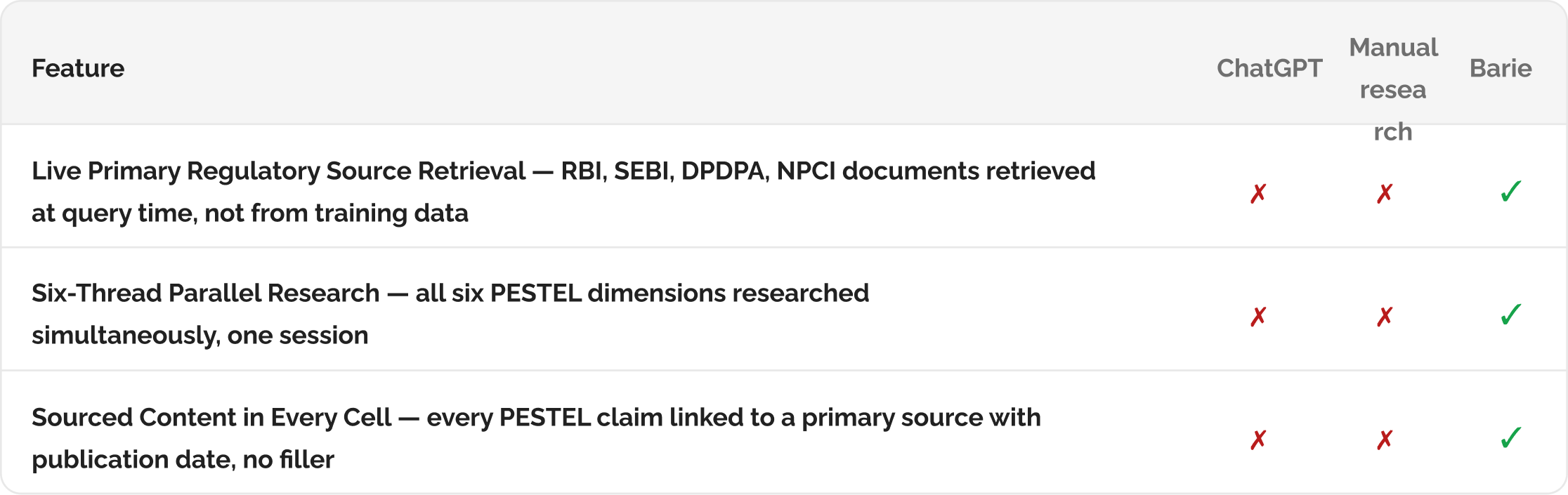
How Barie runs a PESTEL analysis for a fintech company entering the Indian market — six dimensions researched from live government, regulatory, and economic sources
Barie researches each PESTEL dimension from live primary sources — RBI and SEBI publications for political and legal dimensions, IMF and World Bank data for economic dimensions, TRAI and census data for social dimensions, NPCI and MeitY for technological dimensions, and SEBI ESG frameworks for environmental dimensions. The result is a structured PESTEL matrix with sourced, dated content in every cell, not generic statements filled from training-data memory.
Why PESTEL analyses built from training data produce confident but structurally outdated content
A consultant asks an AI tool for a PESTEL analysis for a fintech company entering India. She receives a well-structured matrix with six populated cells. The political cell mentions demonetisation as a context factor. The technological cell references UPI without mentioning the Account Aggregator framework or the Open Network for Digital Commerce, both of which are material to a 2026 fintech market entry. The legal cell does not mention the Digital Personal Data Protection Act 2023, which entered enforcement in 2025 and creates data localisation obligations directly relevant to a foreign fintech’s operating model.
The PESTEL matrix looks complete. The structure is correct. But the content reflects a snapshot of India from the training data, which means it systematically omits the regulatory developments from 2024 and 2025 that are most material to a current market entry decision. A fintech company making a market entry decision in 2026 based on that analysis has an incomplete picture of the legal and regulatory environment they will actually operate in.
Barie retrieves from primary government and regulatory sources at query time — not from training data about India from two years ago: The legal cell contains the DPDPA enforcement circular from Q1 2026. The technological cell contains NPCI’s Q1 2026 UPI transaction volume data. The political cell reflects the current RBI Payments Vision framework, not the 2023 version. Every claim has a primary source URL and a publication date.
Your prompt
Task prompt
“Run a PESTEL analysis for a fintech company entering the Indian market.”
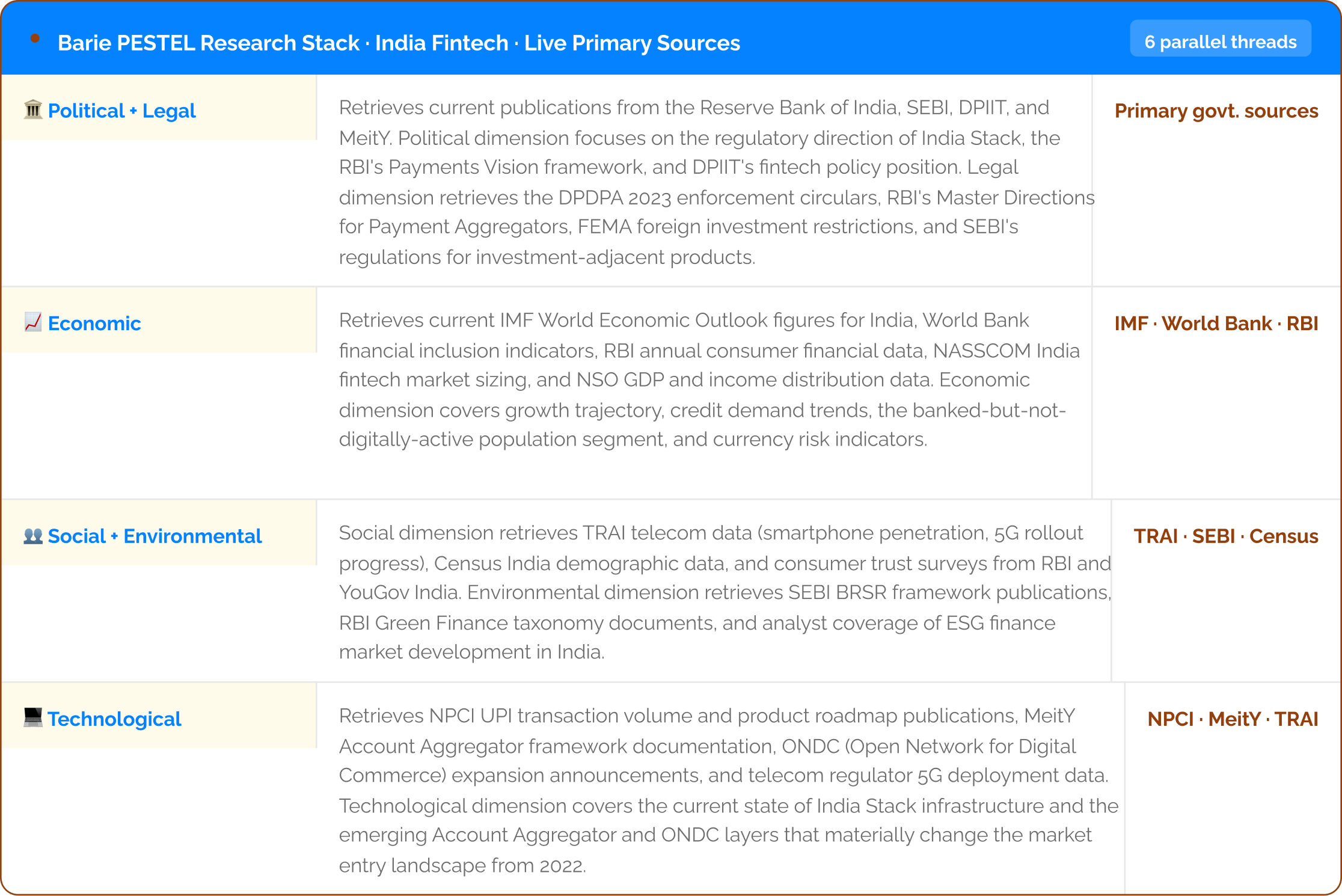
1. Research Stack Activated
Step 1: Research stack activated — six parallel threads, one per PESTEL dimension
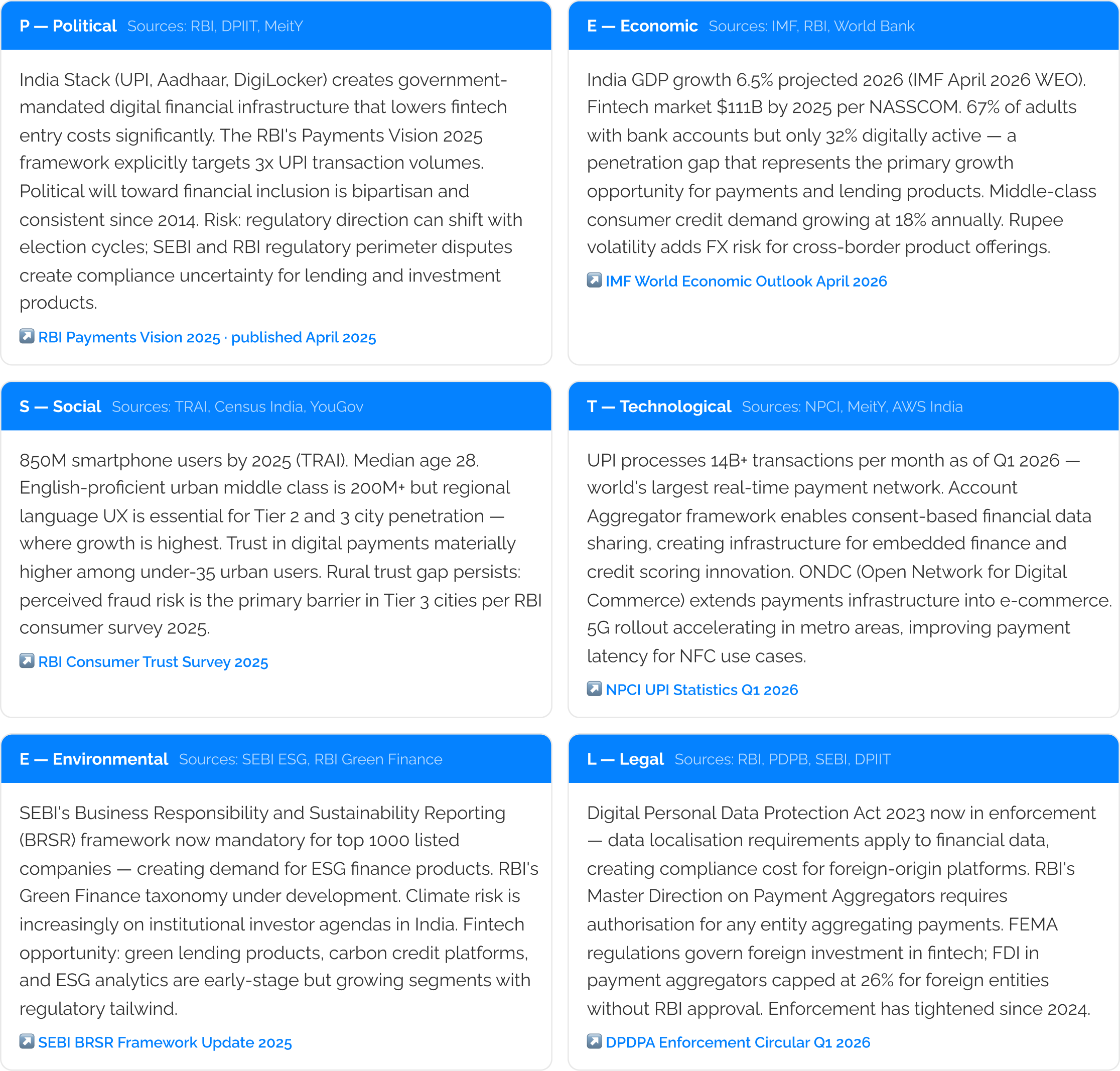
PESTEL Matrix — India Fintech 2026
Step 2: The PESTEL matrix — six dimensions, every cell populated from a live primary source

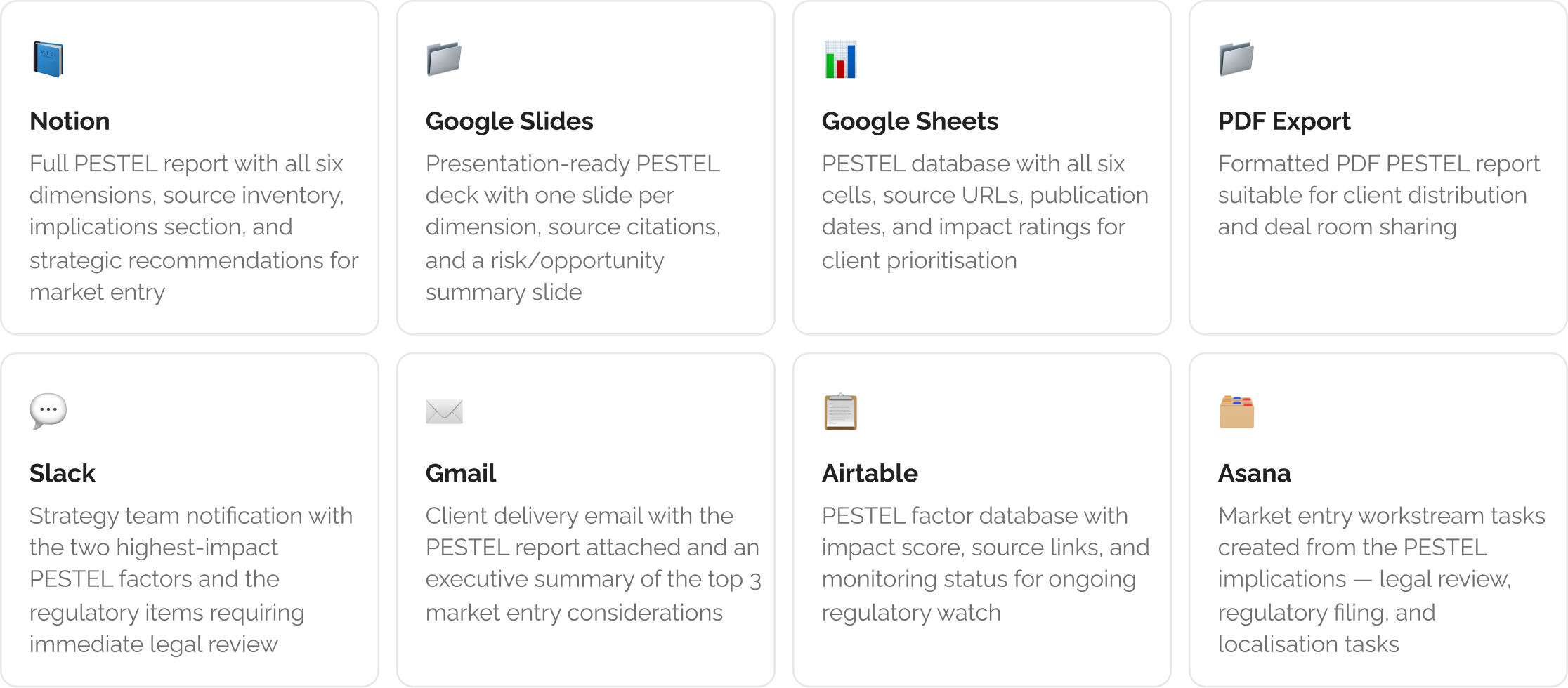
Delivered to Strategy and Client Tools
Step 3: The PESTEL matrix and supporting research delivered to your consulting tools
The Verdict
A PESTEL matrix that does not contain the Digital Personal Data Protection Act 2023 enforcement circulars, the Account Aggregator framework, or the ONDC expansion — all material to a 2026 fintech market entry in India — is not a current analysis. It is a historical one labelled as current. Barie retrieves from RBI, SEBI, NPCI, MeitY, DPIIT, IMF, World Bank, and TRAI at query time. Every cell in the PESTEL matrix is populated with content that reflects the regulatory and market environment a company entering India today will actually operate in, not the environment as it existed in the training corpus.
Barie features used in this task