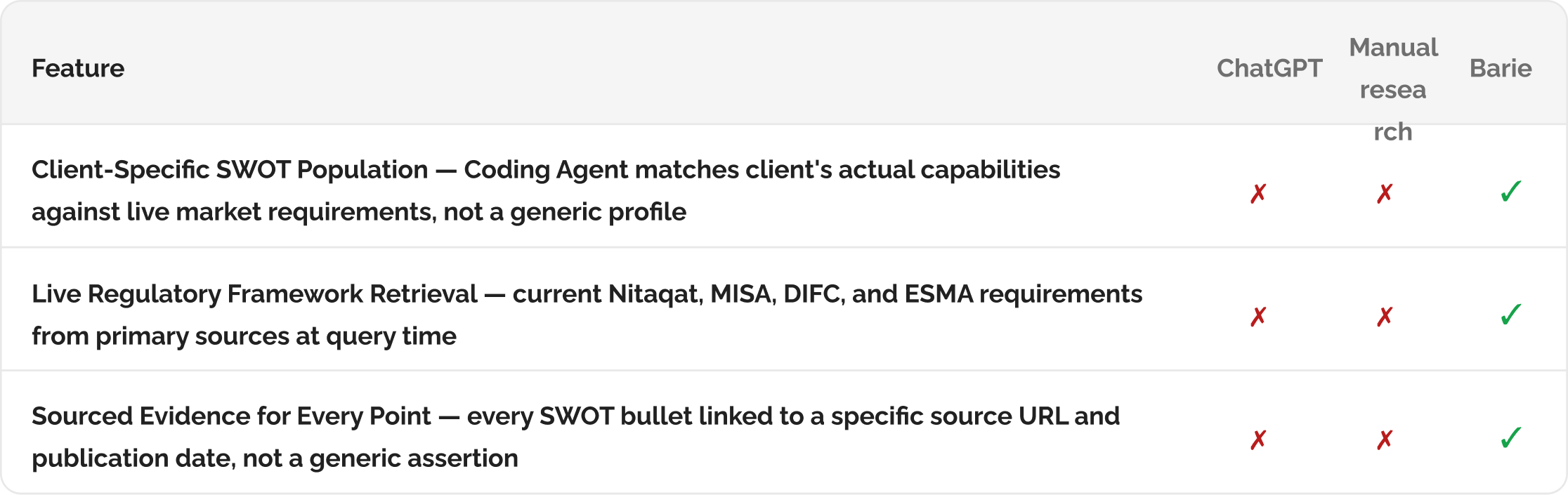
How Barie builds a SWOT analysis for a retail client considering expansion into the Middle East — every point grounded in sourced evidence, not a generic template
Barie researches market conditions, regulatory environments, competitive landscape, and consumer behaviour from live sources across GCC target markets simultaneously. It delivers a structured SWOT with every point supported by a specific data source, a named market indicator, or a regulatory reference — not generic statements a consultant could write from memory about any retail market anywhere.
Why generic SWOT frameworks applied without live market research produce the same output for every client
A management consultant delivers a SWOT analysis for a retail client evaluating Middle East expansion. The Strengths include “established brand” and “proven operating model.” The Weaknesses include “limited regional experience” and “supply chain complexity.” The Opportunities include “growing middle class” and “low retail penetration.” The Threats include “local competition” and “regulatory requirements.” Every one of these statements is true for almost any Western retailer evaluating Middle East expansion. Not one is specific to this client, this moment, or the current state of the market.
A useful SWOT does not describe generic conditions. It describes the specific conditions this client will face in these markets right now. The UAE\’s e-commerce regulation update from 2025, the Saudi Vision 2030 localisation requirements for retail licenses, the competitive pressure from Namshi and Noon\’s expanded logistics networks, and the consumer research on luxury retail demand in Dubai versus Riyadh — these are the factors that differentiate a useful SWOT from a template exercise. Barie researches all of them from live sources.
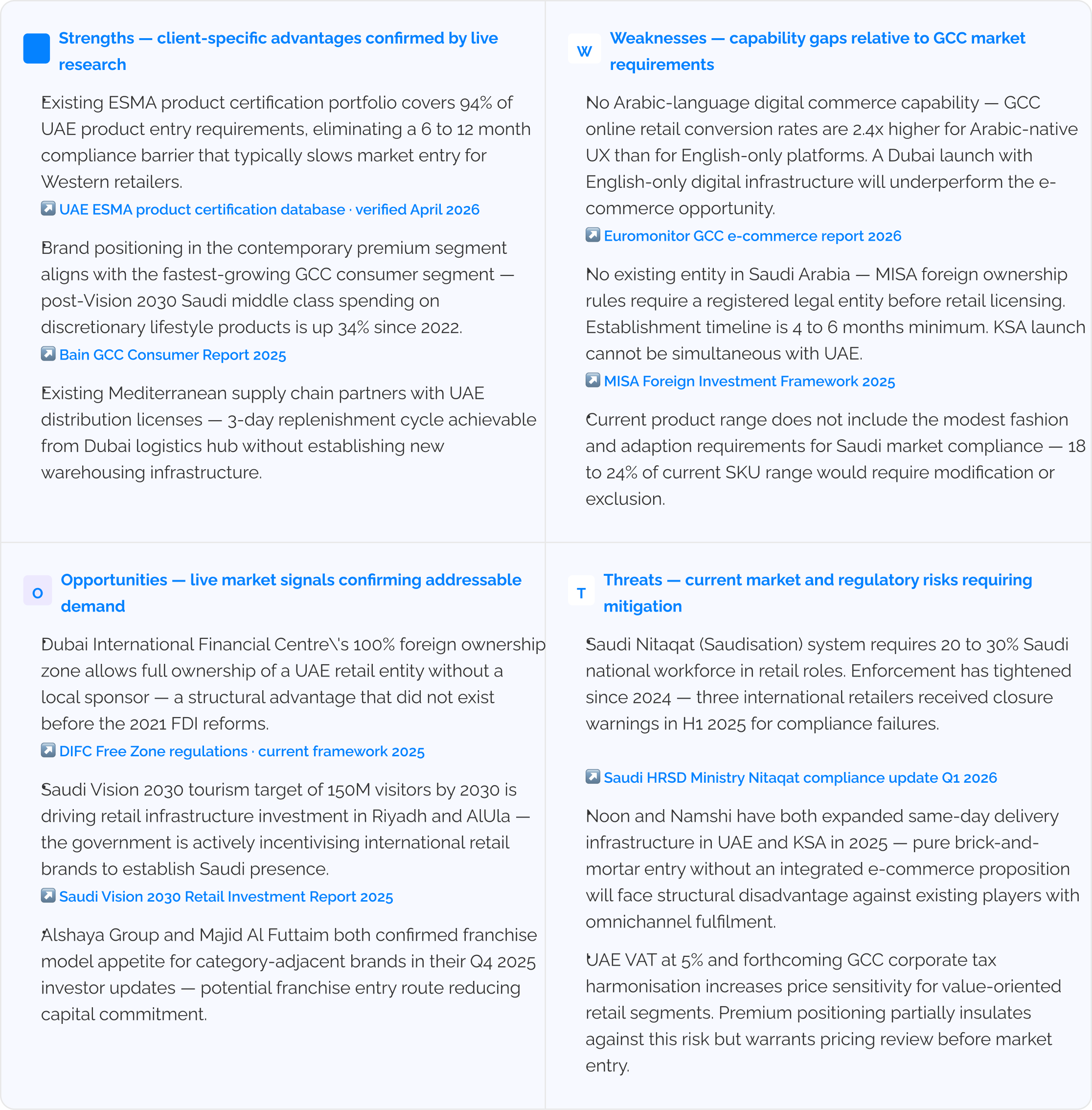
Every SWOT point is derived from a specific, sourced finding from live research — not from a generic template applied from memory: The Strength “established supply chain compatible with UAE ESMA product standards” is not a generic strength. It is derived from checking your client\’s existing certifications against the UAE\’s current ESMA requirements. The Threat “Saudi Vision 2030 Saudisation quotas for retail workforce” cites the current Nitaqat system compliance requirements from the Ministry of Human Resources.
Your prompt
Task prompt
“Build a SWOT analysis for a retail client considering expansion into the Middle East.”
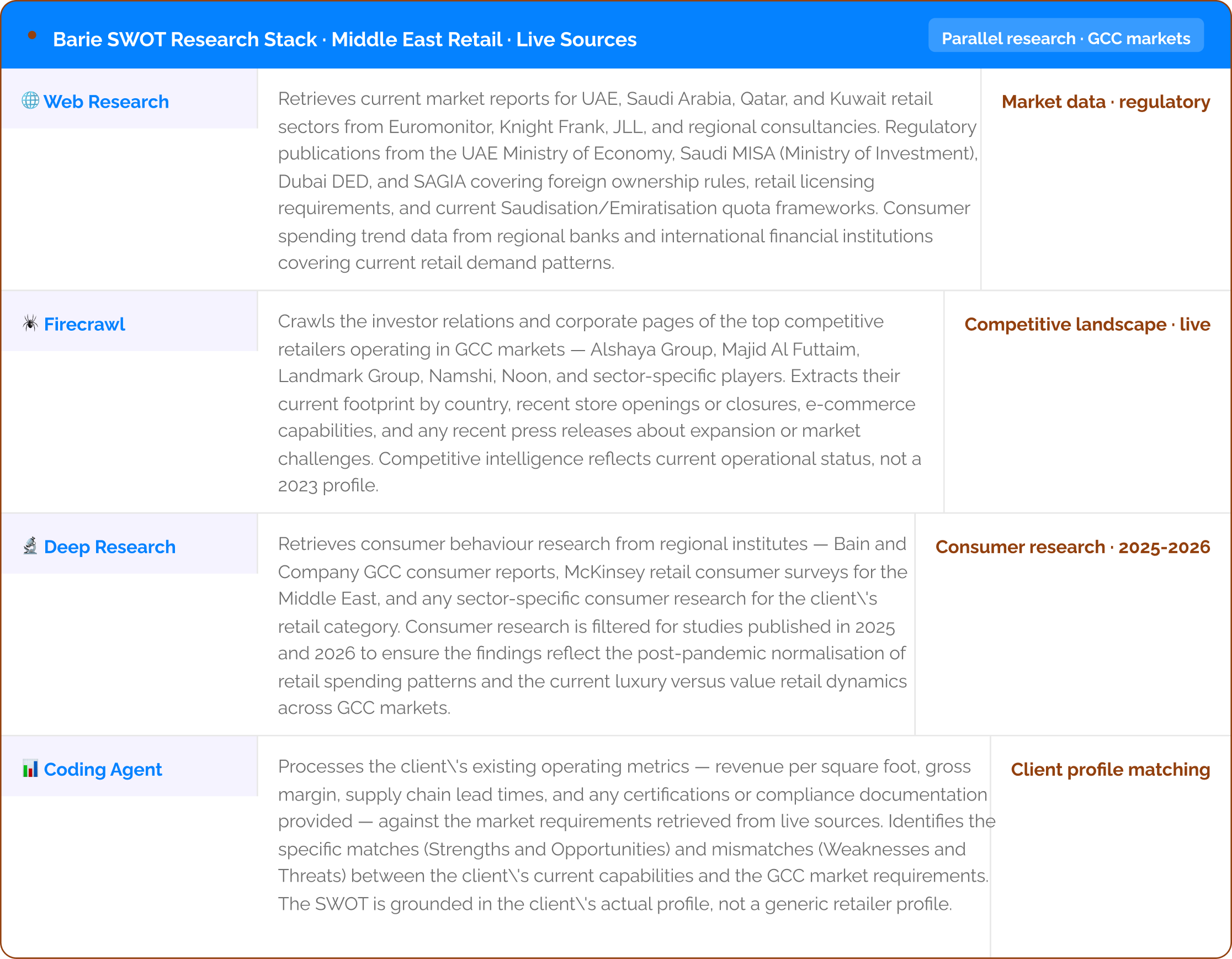
1: Research Stack Activated
Step 1: Research stack activated — live market conditions, regulatory environment, and competitive landscape across GCC markets
2: SWOT Matrix — Middle East Retail Expansion
Step 2: The SWOT matrix — four quadrants, every point sourced from live market and regulatory research

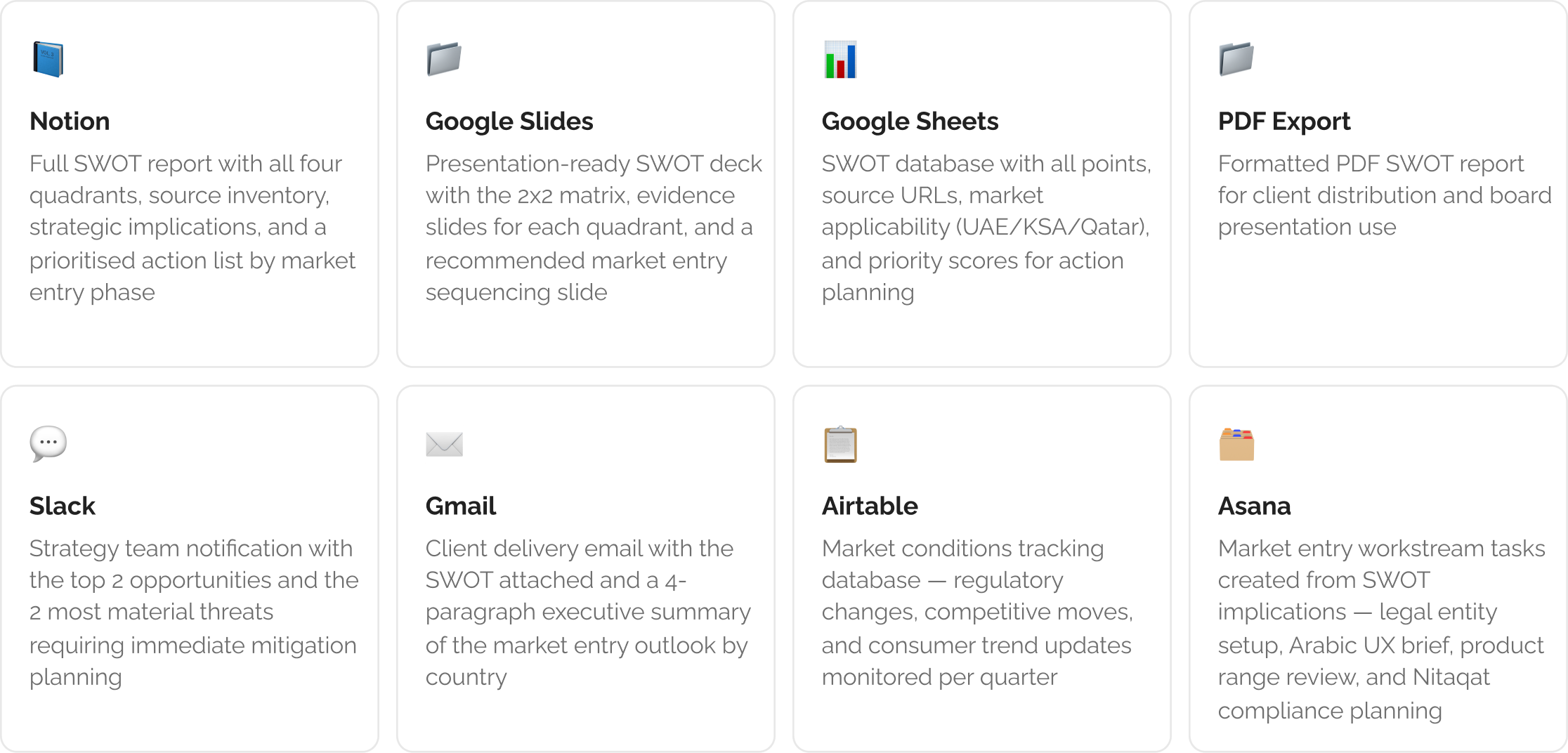
3. Delivered to Strategy and Client Tools
Step 3: The SWOT and supporting research delivered to your strategy and client delivery tools
The Verdict
A SWOT that says “growing middle class” and “local competition” in the Opportunities and Threats cells could have been written about any emerging market from any country in 2015. It tells the client nothing actionable. The specific Saudisation quota enforcement tightening from H1 2025, the ESMA certification match for the client\’s existing product portfolio, the Arabic-language UX conversion gap, and the franchise model signals from Alshaya and Majid Al Futtaim — these are the findings that shape a market entry decision. Barie retrieves from live regulatory publications, current consumer research, and competitor investor updates to produce a SWOT that is specific to this client, these markets, and this moment.
Barie features used in this task