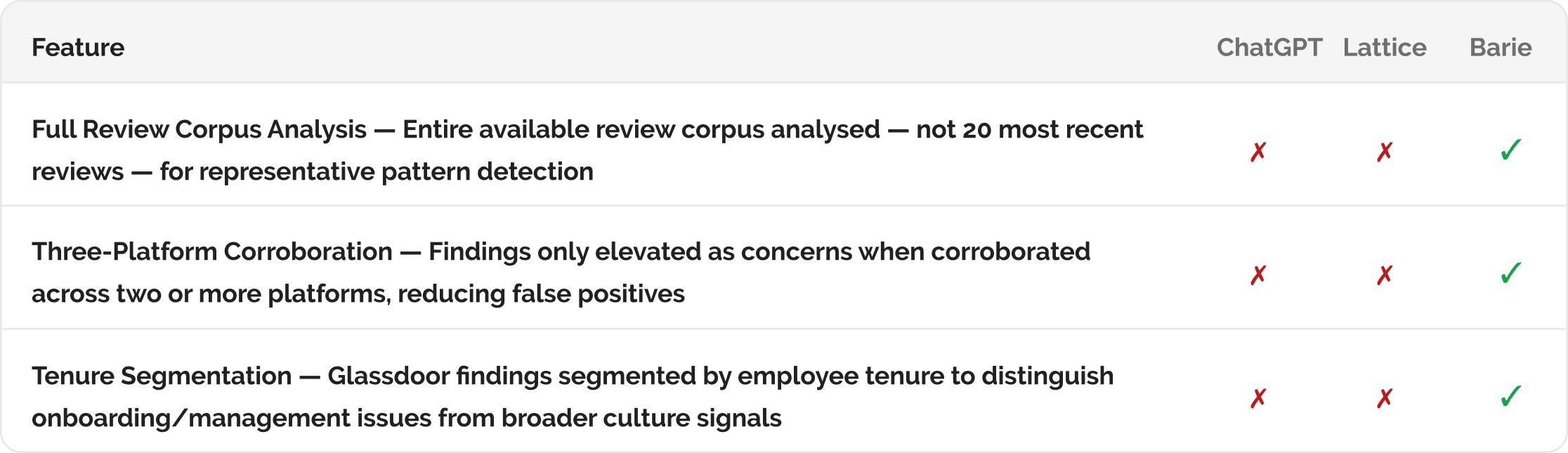
How Barie analyses your employer brand perception on Glassdoor, Blind, and LinkedIn — identifying strengths and concerns across five key themes
Barie scans live reviews and employee discussions across Glassdoor, Blind, and LinkedIn simultaneously. It categorises sentiment by theme across culture, compensation, leadership, career growth, and work-life balance — identifying recurring patterns in both positive and negative feedback. The output is a structured employer brand report with theme scores, verbatim evidence quotes, and source links for every finding.
Why employer brand analysis done manually produces a confirmation bias sample rather than a representative picture
An HR director wants to understand how her company is perceived as an employer. She reads the most recent 20 Glassdoor reviews and forms an impression. But the most recent 20 reviews represent a specific selection bias: they over-index on recent hires who left quickly (who are more likely to write a negative review within their first 90 days) and on employees who self-selected to write a review at all (who are not representative of the silent majority who neither praise nor criticise publicly). The impression she forms is shaped by recency and self-selection effects, not by a structured analysis of the available signal.
Structured employer brand analysis requires reading across a much larger review corpus, identifying themes systematically rather than through impression, and cross-referencing signals across platforms to distinguish genuine cultural patterns from platform-specific vocal minorities. What 200 Glassdoor reviews say about leadership, compared against 80 Blind threads about the same company and LinkedIn content engagement patterns, tells a materially different story than the 20 most recent reviews alone.
Barie reads the full available review corpus across all three platforms simultaneously, categorises feedback by theme automatically, and cross-references patterns across platforms before surfacing findings: A leadership concern that appears in 34% of Glassdoor reviews and is corroborated by an active Blind thread is a finding. The same concern appearing in 8% of reviews where the Blind platform shows no corroboration is a different signal that warrants a different response. Barie distinguishes between the two.
Your prompt
Task prompt
“Analyse our employer brand perception on Glassdoor, Blind, and LinkedIn, identify strengths and concerns.”
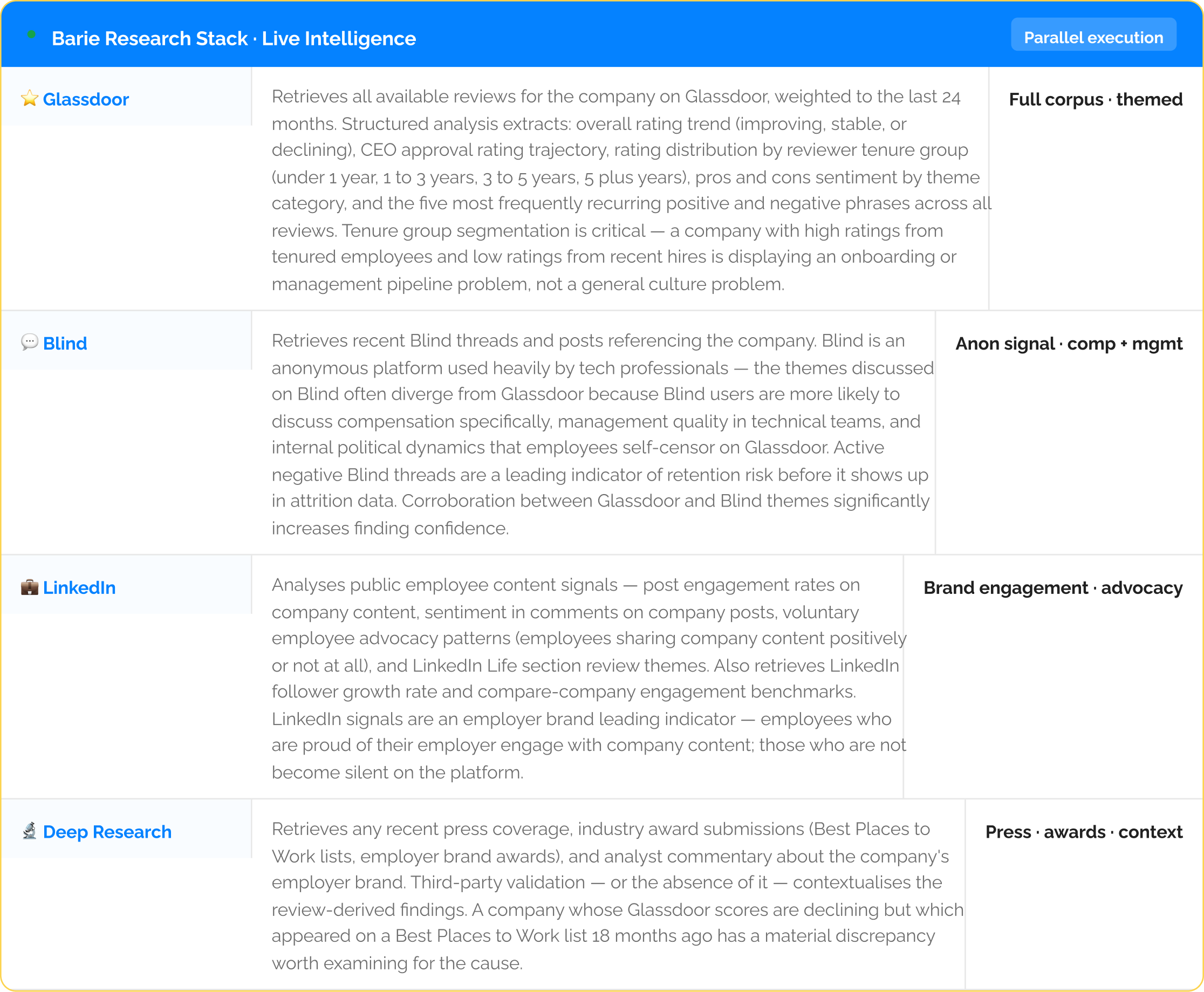
1: Research Stack Activated
Step 1: Research stack activated — live sources covering every dimension of this analysis
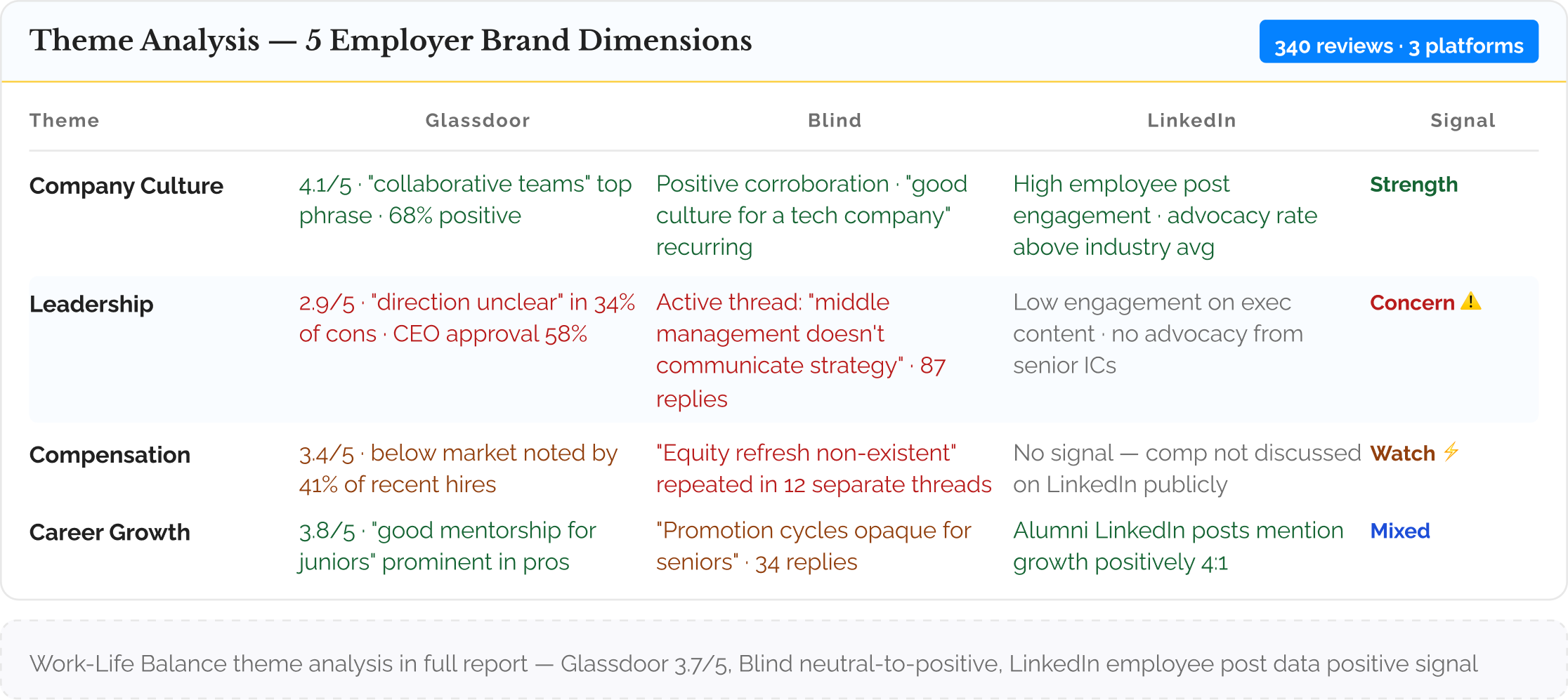
2: Structured Output
Step 2: The structured output — every finding sourced, every data point traceable

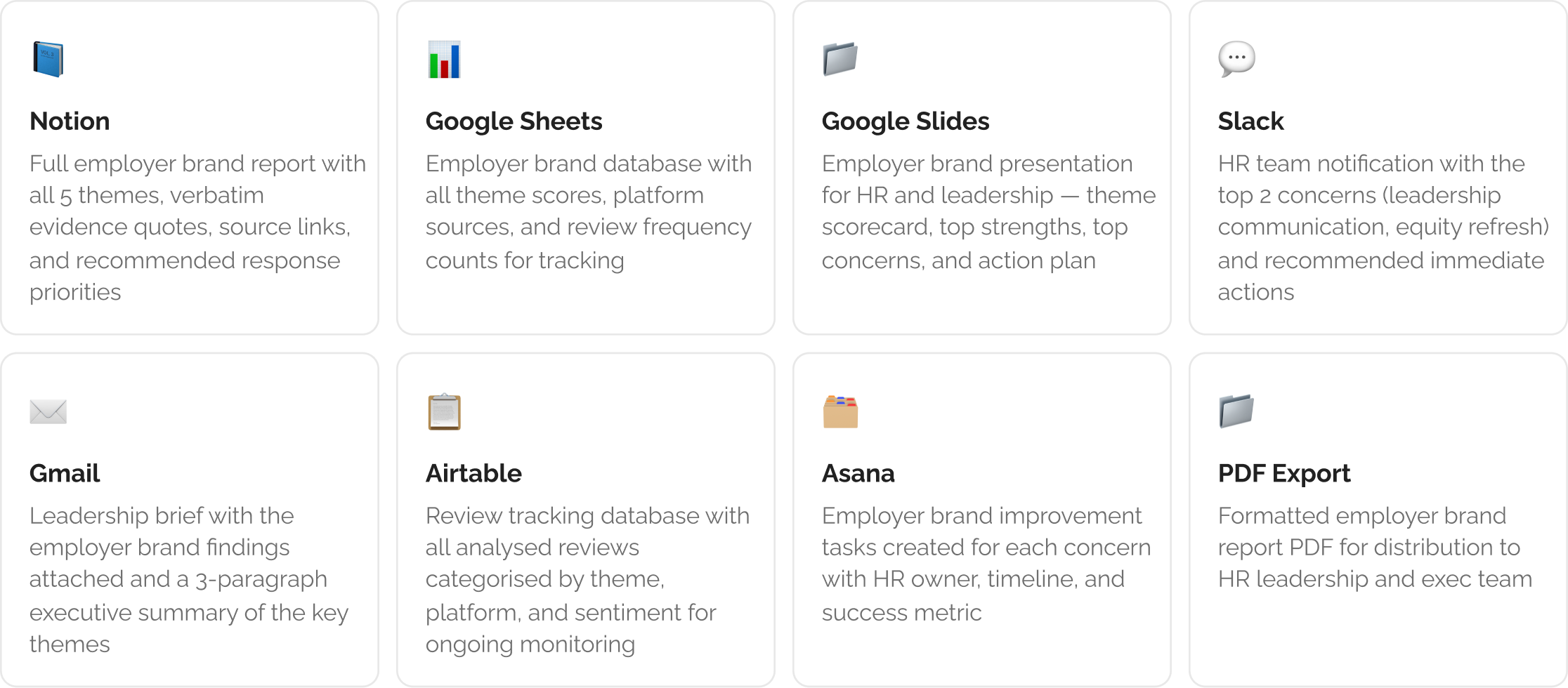
3: Delivered to Your Tools
Step 3: Results delivered to your HR, people ops, and strategy tools
The Verdict
Twenty reviews read by one person form an impression. Three hundred and forty reviews across three platforms categorised by theme, cross-referenced for corroboration, and segmented by employee tenure produce a finding. The leadership communication concern in the output is not one person’s frustration. It appears in 34% of Glassdoor cons, is corroborated by an active 87-reply Blind thread, and shows as low exec content engagement on LinkedIn. That three-platform corroboration is the signal that warrants an immediate response. The compensation concern shows on two platforms but not on LinkedIn — a different signal intensity that warrants a different response priority. Barie distinguishes between the two.
Barie features used in this task