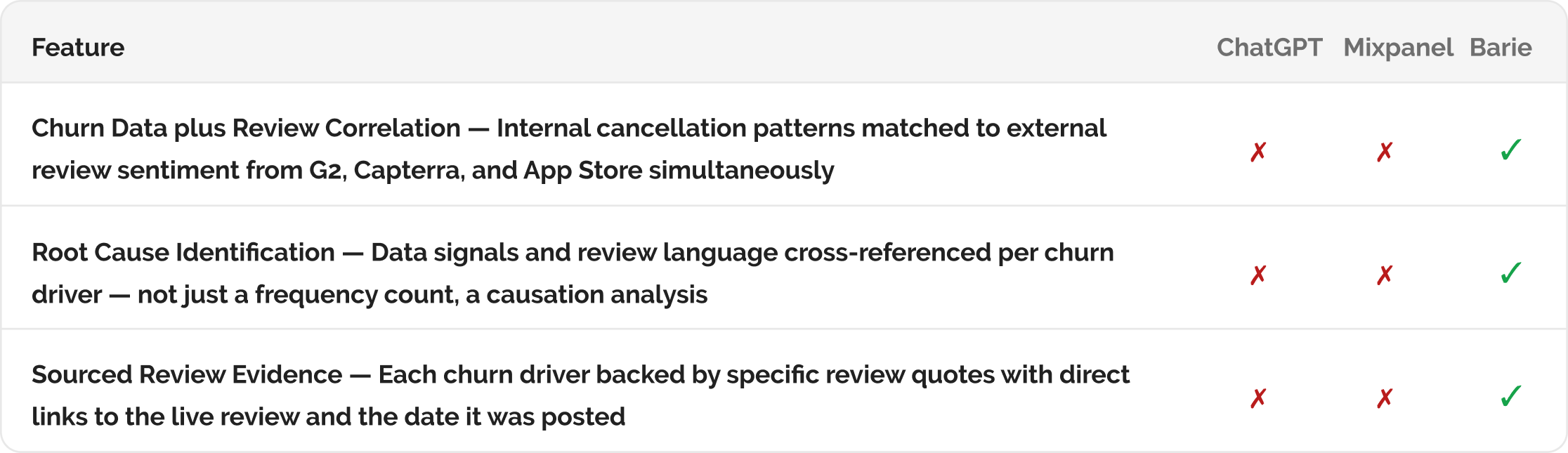
How Barie cross-references your churn data with public product reviews to identify the top drivers of cancellation
Barie processes your uploaded churn dataset and simultaneously scans live product reviews from G2, Capterra, and the App Store. It matches your internal cancellation patterns against external review sentiment themes, identifies the three root causes responsible for the largest share of churn, and delivers a structured report with each driver backed by your own data and sourced review evidence.
Why churn analysis from internal data alone produces the symptom but not the cause
A CS leader analyses churn data and identifies that 31% of churned accounts cancelled within 60 days. She categorises this as “early churn” and creates a 30-day check-in task for new accounts. The intervention helps slightly but does not address the root cause — because the root cause is not a missing check-in. It is that new users are encountering a specific friction point in the onboarding flow that is causing them to conclude the product will not work for their use case, and they are leaving without ever reaching the first value moment.
The distinction between “cancelled within 60 days” (the symptom from the data) and “cannot complete the CRM integration during onboarding” (the root cause from the reviews) is the difference between an intervention that adds a call and an intervention that fixes the onboarding flow. Review data is where customers tell you why they left in their own words. Barie reads both sources simultaneously and connects them.
Barie correlates your churn patterns with review themes to identify root causes, not just frequencies: The output is not a list of the most common review complaints. It is a structured correlation: the specific review themes that appear with elevated frequency in the same period and account cohort as each identified churn pattern. The review evidence corroborates the data signal. Together they confirm a root cause rather than suggesting a hypothesis.
Your prompt
Task prompt
“Cross-reference our churn data with public product reviews to identify top drivers of cancellation.”
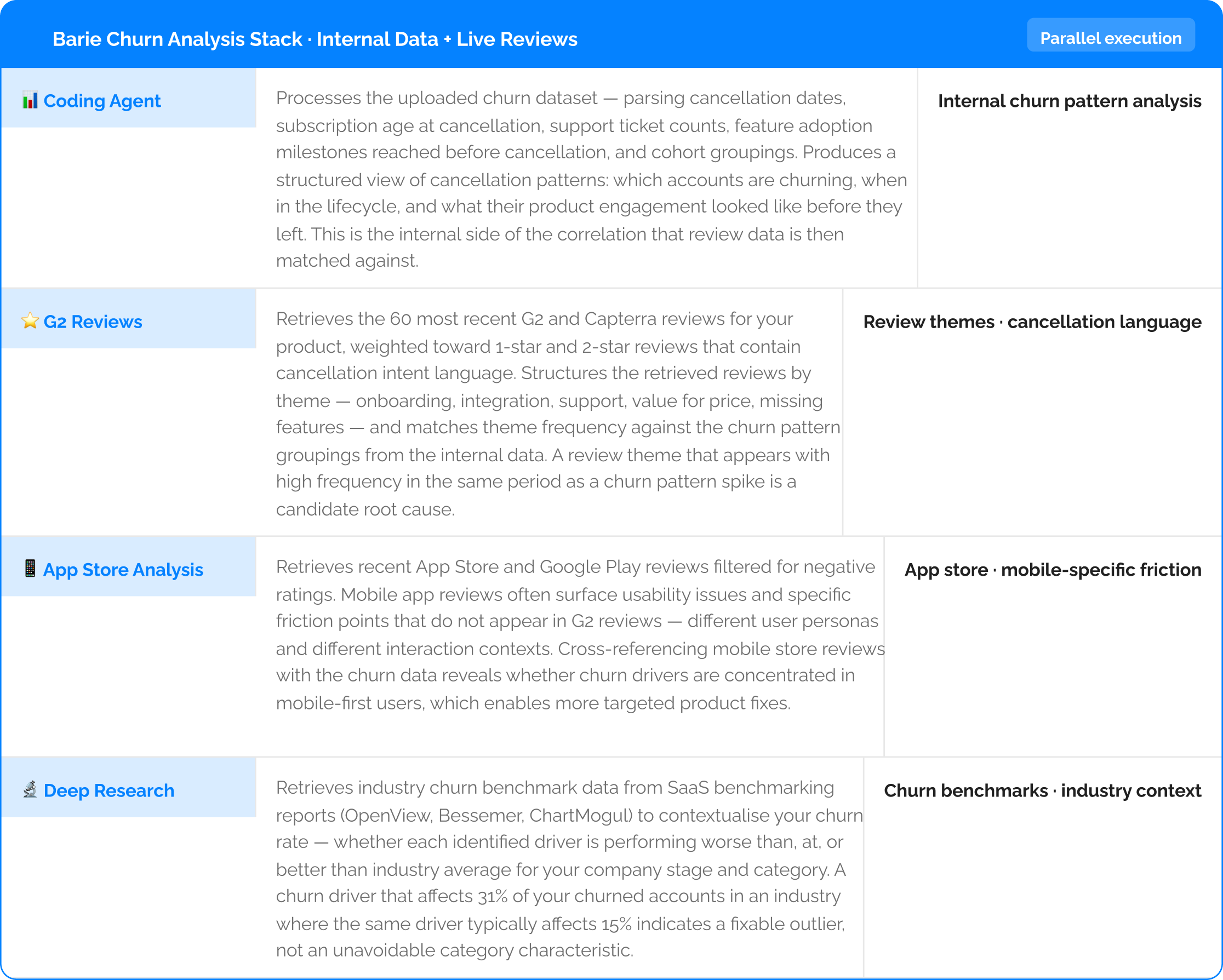
1: Four Connectors Activated
Step 1: Four connectors activated — internal churn data processing and live review retrieval simultaneously
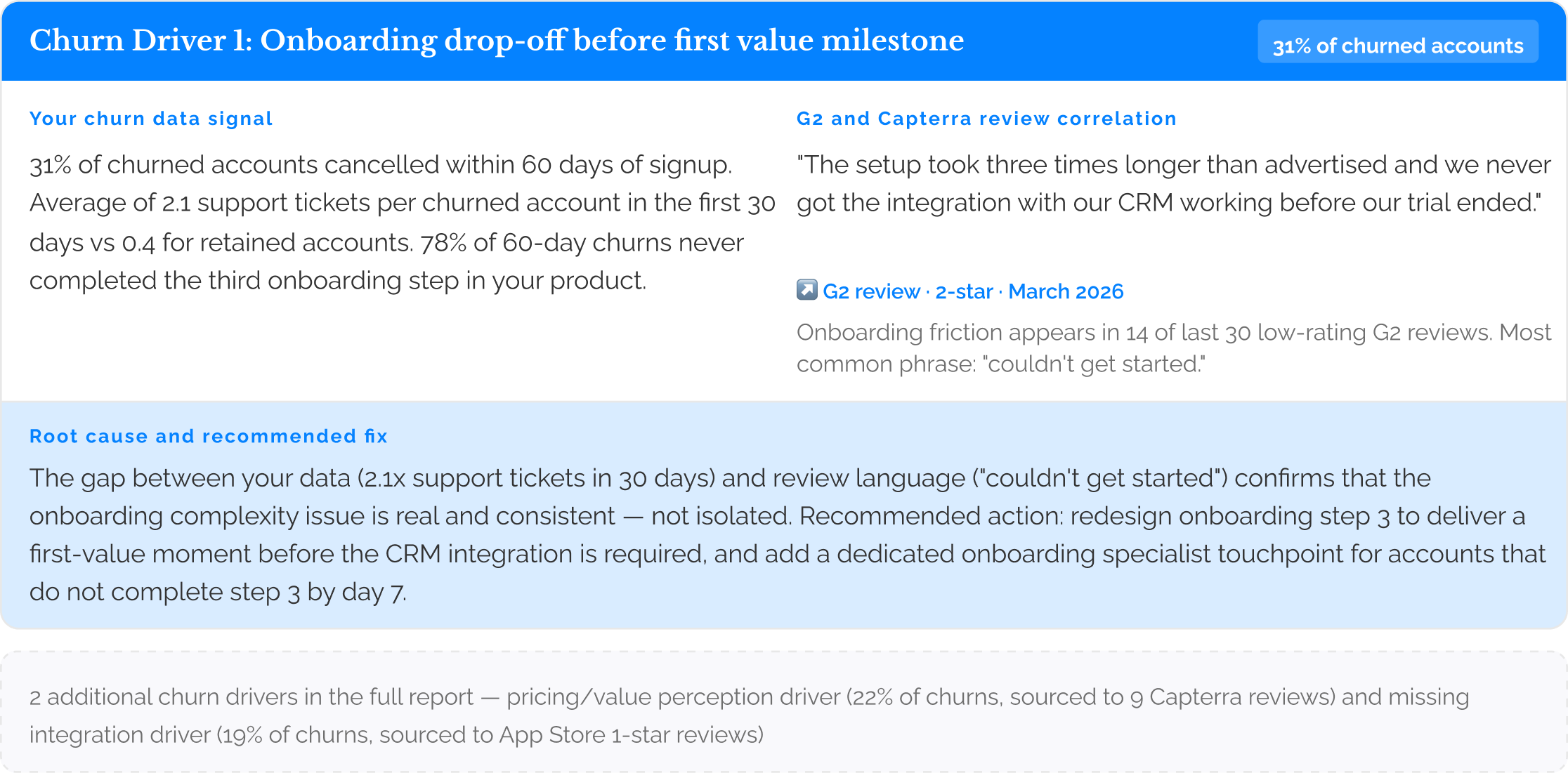
2: Correlated Churn Drivers — Data and Review Evidence
Step 2: Three churn drivers identified — each with internal data signal and sourced review corroboration

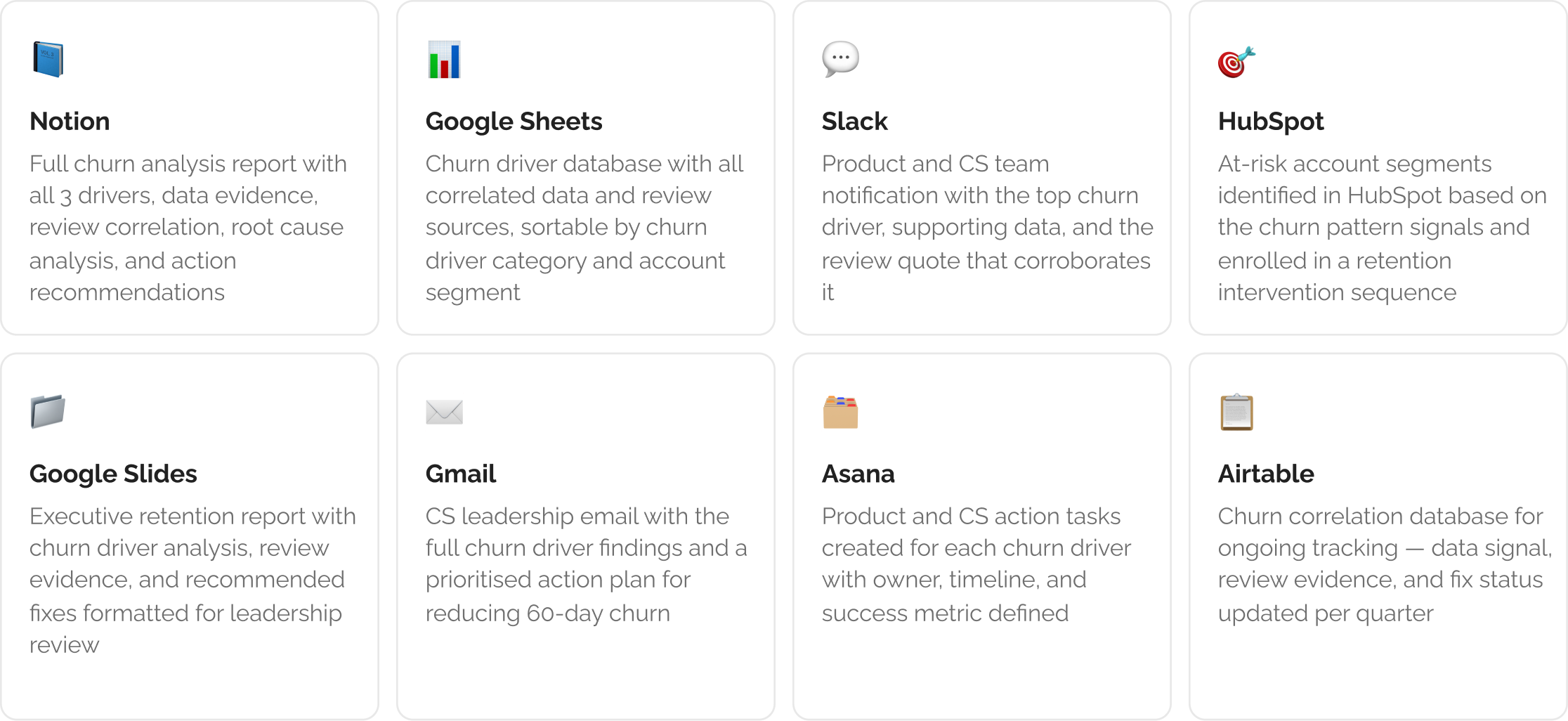
3: Delivered to Retention and Product Tools
Step 3: The churn report delivered to your CS, product, and leadership tools
The Verdict
A churn analysis that says 31% of accounts cancel within 60 days tells the CS team to call more new accounts. A churn analysis that says 31% of accounts cancel within 60 days, and 14 of the last 30 G2 reviews from churned users describe being unable to complete the CRM integration before their trial ended, tells the product team exactly which onboarding step to fix. Barie produces the second analysis because it reads both sources simultaneously. The root cause is in the intersection of what your data shows and what your customers say. Neither source alone gets you there.
Barie features used in this task