How Barie builds a go-to-market strategy for launching a B2B SaaS product in Europe
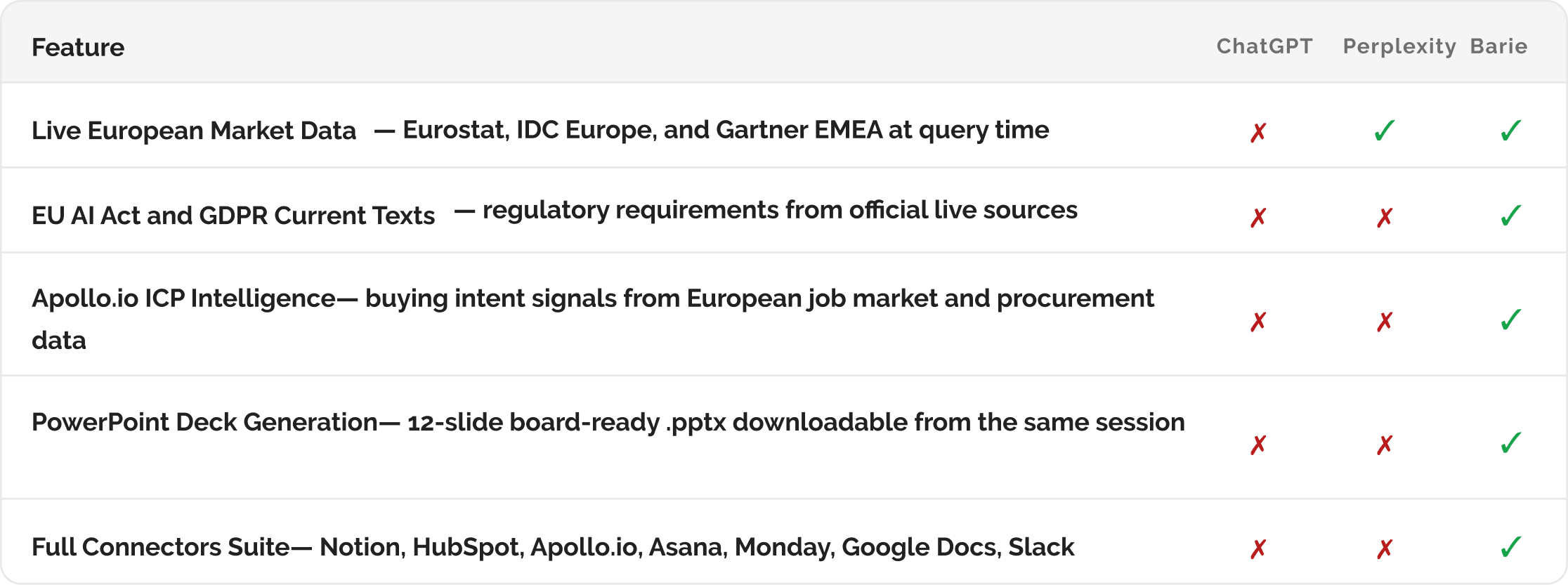
Barie researches market size, competitive landscape, regulatory considerations, pricing benchmarks, and distribution channels from live sources. It delivers a structured GTM framework with sourced data behind every recommendation — not a consulting template filled with placeholder advice your team still has to go and validate.
The problem with AI-generated strategy frameworks
A VP of Sales asked a well-known AI tool to help build a GTM strategy for expanding their B2B SaaS product into Germany, France, and the Netherlands. The output was fourteen pages long. It covered ICP definition, channel strategy, pricing models, regulatory considerations, and a 90-day launch plan. It was professionally formatted, logically structured, and thoroughly useless.
Every data point was either approximate, outdated, or sourced from the model’s own training data with no way to verify it. The market size figures could not be traced to any report. The competitor pricing section described a competitor’s pricing that had changed eight months earlier. The regulatory section did not reference the AI Act or the Digital Markets Act, both of which had become relevant to their product category since the model’s training cutoff.
A strategy built on unverifiable data is not a strategy. It is a structured guess. And in a market entry decision, the cost of a structured guess is measured in wasted runway.
Why GTM strategy specifically requires live research: European market structure, SaaS pricing benchmarks, and regulatory requirements all change faster than any training dataset. GDPR enforcement practice has evolved significantly since 2018. The EU AI Act created new compliance categories in 2025. Competitor pricing across the European SaaS market shifts quarterly. A GTM strategy needs data from this quarter, not data from whenever the model was last trained.
Your prompt
Your prompt
“Build a go-to-market strategy for launching a B2B SaaS product in Europe.”
One sentence. Barie identifies the five research dimensions that every credible European SaaS GTM requires, fires parallel live research threads across each, synthesises the findings into a structured framework, and produces both a Notion strategy document and a downloadable PowerPoint deck for board and investor presentations. Here is exactly how the work runs.
1: Task Decomposition
Step 1: Five research dimensions that every European SaaS GTM requires
Before Barie retrieves a single data point, it maps the five research dimensions that a credible B2B SaaS go-to-market for Europe must answer. Generic GTM frameworks ignore the specific challenges of the European market, which is not a single market. It is 27 regulatory environments, multiple languages, fragmented distribution channels, and different enterprise buying behaviours across country clusters. Barie structures the research to answer questions specific to the European context.
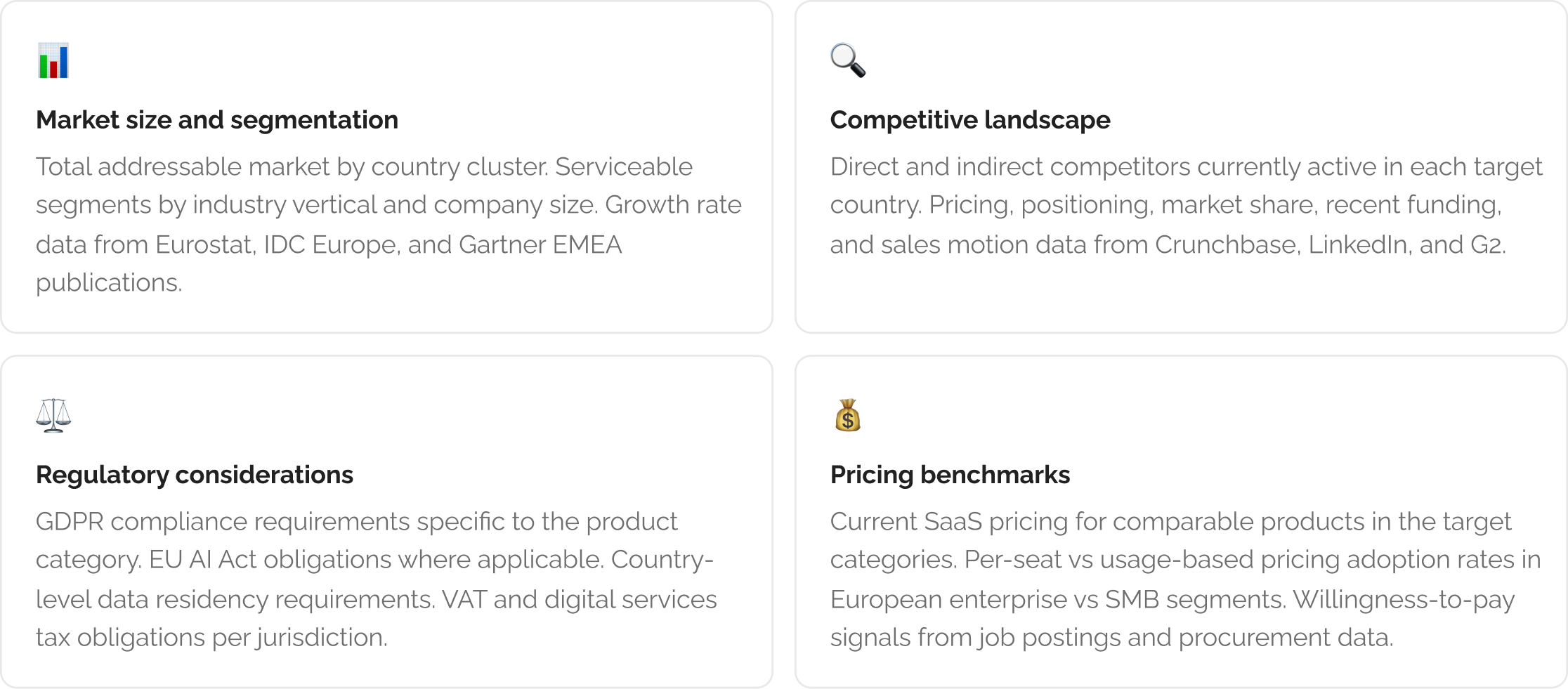
The fifth dimension is distribution channel mapping. European enterprise SaaS distribution differs significantly from the US model. Channel partner density, VAR networks, and system integrator relationships vary by country and vertical. Barie maps the active distribution channels for each target market before recommending a sales motion.
2: Parallel Live Research
Step 2: Five parallel research threads, all firing from live sources

Apollo.io contributes ICP signal data by surfacing the job titles, company sizes, and industries that are actively hiring for roles that indicate budget and buying intent for your product category in each target country. This means the ICP definition in the GTM framework is not a persona built from intuition. It is built from evidence about who is currently spending on this category in Europe right now.
All five threads run simultaneously: Barie does not finish the market sizing research and then start the competitive analysis. All five threads fire in parallel. The full research dataset across all five dimensions is assembled before any synthesis or writing begins. This means the GTM framework can identify cross-dimensional insights, such as a pricing signal from the competitive landscape that informs the channel strategy recommendation, rather than treating each dimension as an isolated finding.
3: Structured GTM Framework
Step 3: The structured GTM framework, every recommendation sourced

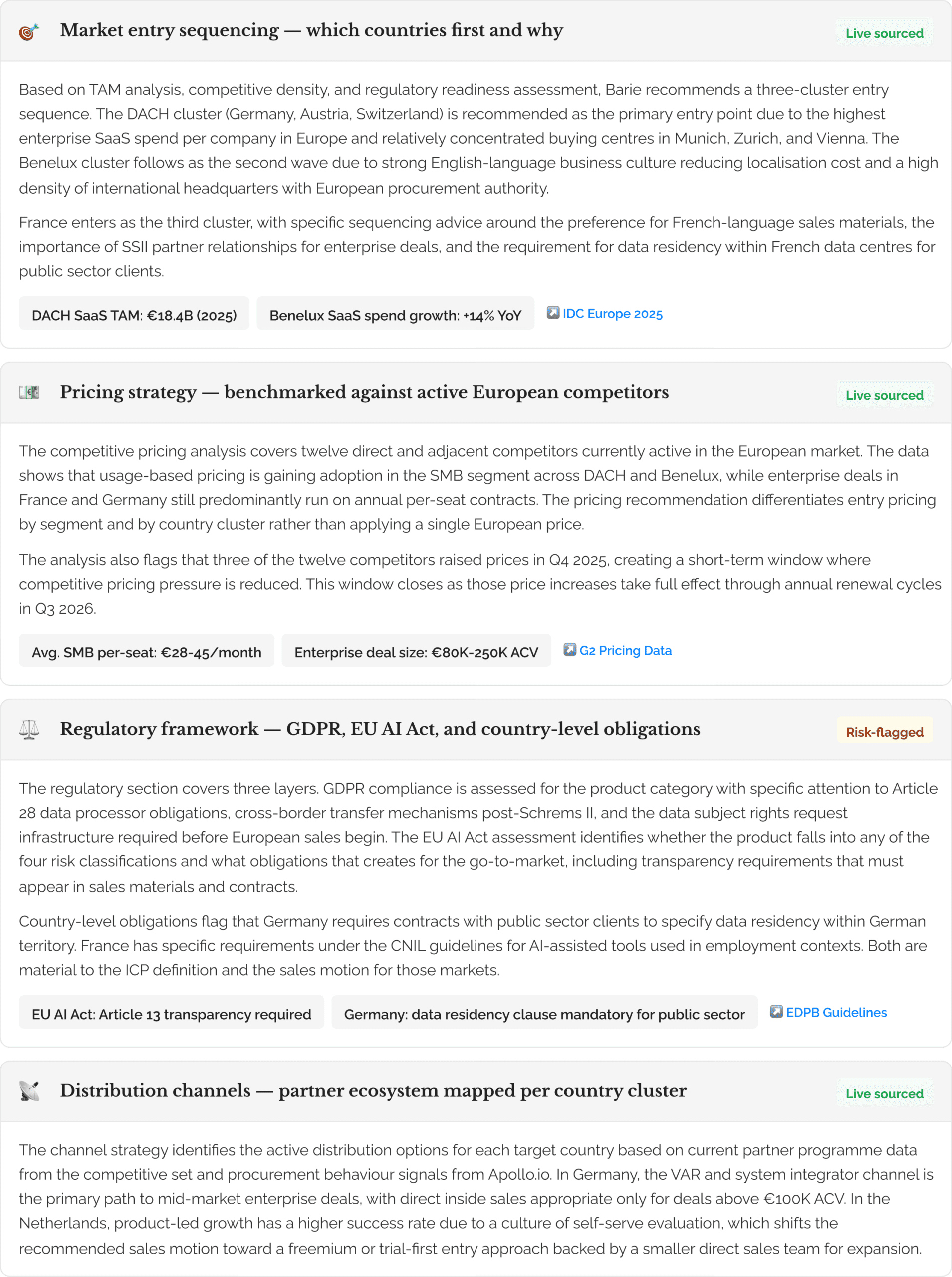
Every recommendation links to the data that produced it: The market entry sequencing links to the IDC Europe report it drew market size data from. The pricing strategy links to the G2 category pages where competitor pricing was retrieved. The regulatory section links to the EDPB guidelines and the EU AI Act provisions that generated each compliance point. A board member who challenges any recommendation can follow the source link to the primary data in one click.
4: GTM Deck + Multi-Tool Export
Step 4: Board-ready PowerPoint deck and full workflow distribution
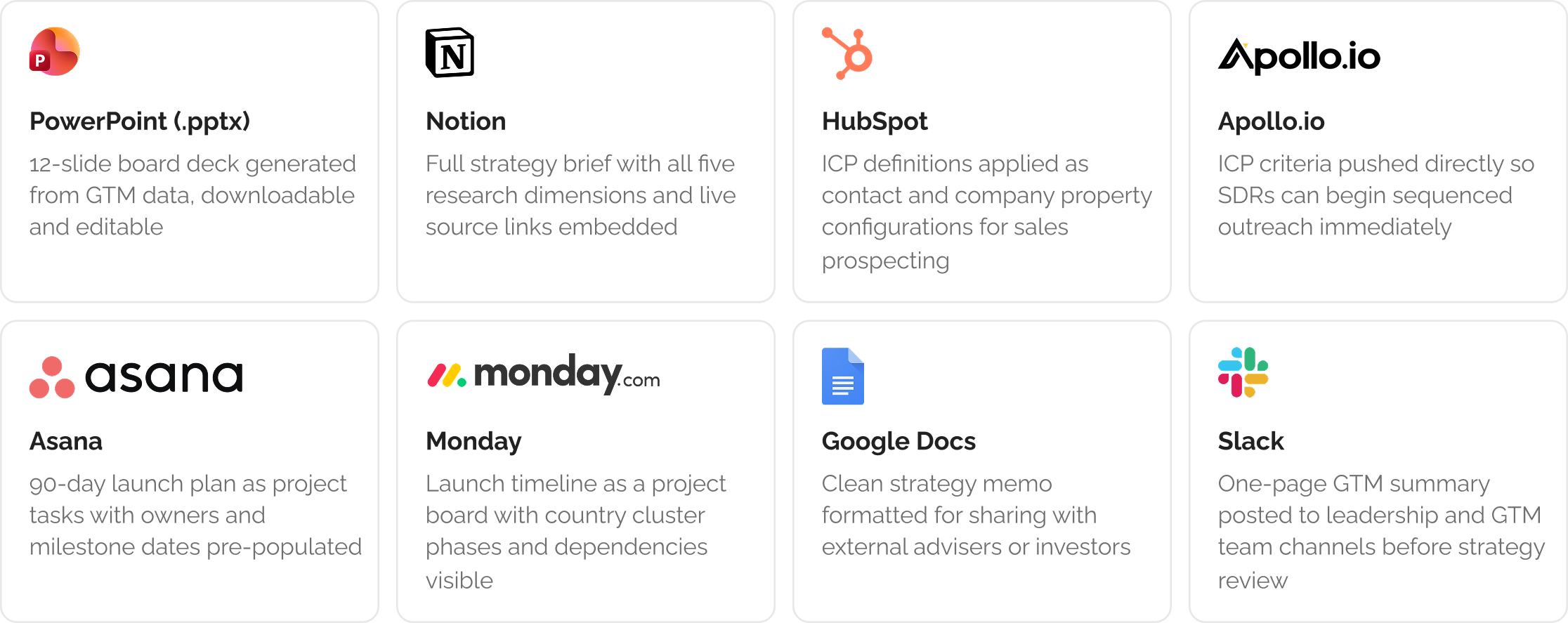
Once the GTM framework is complete, Barie generates a PowerPoint presentation from the research data and exports it as a downloadable .pptx file. The deck is structured for a board or investor presentation, not for internal reference. Each slide leads with the strategic implication, not the data. The supporting data appears as evidence rather than as the headline.
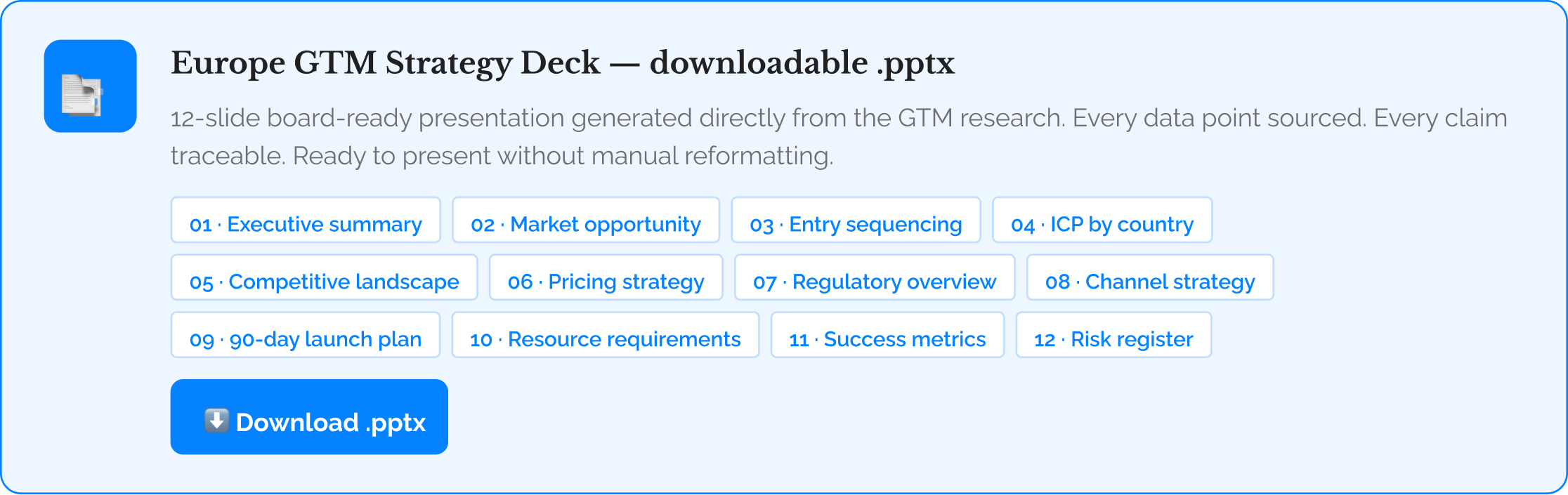
Beyond the deck, the full GTM framework is distributed across your strategy and operations tools via Barie Connectors. The complete Notion document holds the research brief with all source links embedded. HubSpot receives the ICP definitions as contact and company property configurations so your sales team can start prospecting immediately. Asana or Monday gets the 90-day launch plan as project tasks with owners and deadlines. Apollo.io receives the ICP criteria directly so your SDRs can run sequenced outreach from the moment the strategy is signed off.
The Verdict
A GTM strategy built from training data is a structured guess. The EU AI Act obligations that apply to your product category were not settled law when most AI models were trained. The competitor that raised prices in Q4 2025 still appears at its old pricing in any training-data answer. The EDPB guidance that affects your Article 28 obligations was published after the training cutoff. Barie retrieves from live regulatory texts, current competitor pricing pages, and real-time market data, synthesises the findings across five research dimensions simultaneously, and produces a strategy document and a presentation deck where every claim can be verified in one click. That is not a faster way to produce a template. That is a different standard of research.
Barie features used in this task