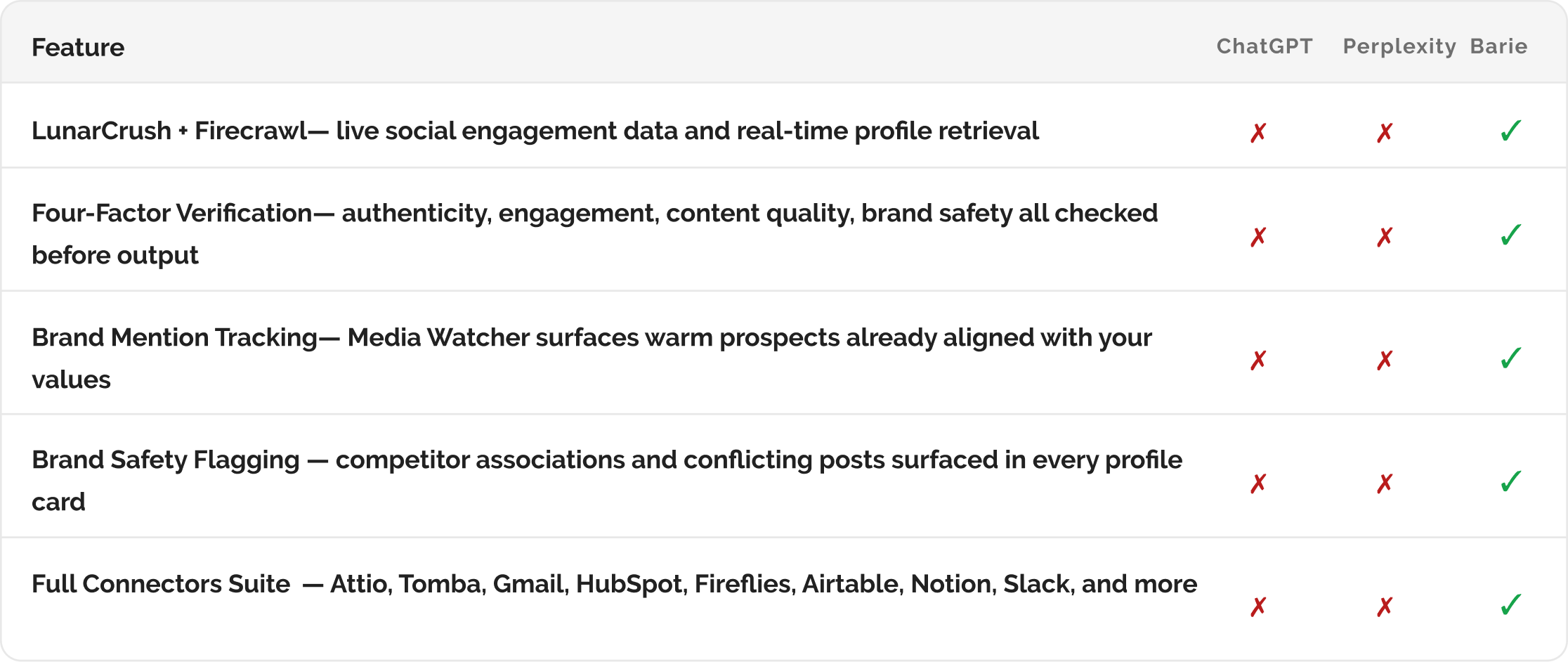
How Barie finds 15 micro-influencers in sustainable fashion with engaged audiences between 10K and 100K followers
Barie searches social platforms, influencer databases, and brand mention tracking simultaneously. It applies a four-factor scoring framework across follower count verification, engagement rate, content authenticity, and brand alignment, then delivers a structured list of 15 verified micro-influencer profiles with live metrics for each. Not a database export. Not a cached list. Your actual candidates ranked and ready to contact.
The problem with manual influencer research
A brand partnerships manager at a sustainable fashion label spent two days researching micro-influencers before a campaign brief. She found 30 profiles across Instagram and TikTok using hashtag searches and a paid influencer platform. She shortlisted 15. When her team started reaching out, four of the profiles had purchased followers and inflated engagement rates. Three had promoted fast-fashion brands in their last 90 days of content. Two had audience demographics that did not align with the brand’s target market.
Nine of fifteen candidates were unusable. The research had to restart.
The problem is not finding people with the right follower count. Any hashtag search surfaces those. The problem is verifying that the engagement is genuine, that the content is authentically aligned, and that there are no brand safety issues hiding in their recent post history. Manual research cannot do all three reliably across 30 profiles in any reasonable amount of time.
What Barie checks that manual research misses: Barie does not just find profiles. It applies a four-factor check to every candidate before they appear in the output. Follower authenticity is cross-referenced against engagement pattern data. Recent brand mentions are scanned for competitor or conflicting brand associations. Content quality is assessed from the last 30 posts. Audience demographic alignment is verified against your stated target market. A candidate that fails any of these four checks does not make the list.
Your prompt
Task prompt
“Find 15 micro-influencers in sustainable fashion with engaged audiences between 10K and 100K followers.”
One sentence. Barie defines the discovery parameters, fires parallel searches across social platforms and influencer databases, applies the four-factor scoring framework to every candidate, and delivers 15 verified profiles with full metrics. Here is exactly how the workflow runs.
1. Task Decomposition
Step 1: Defining the search parameters before discovery begins
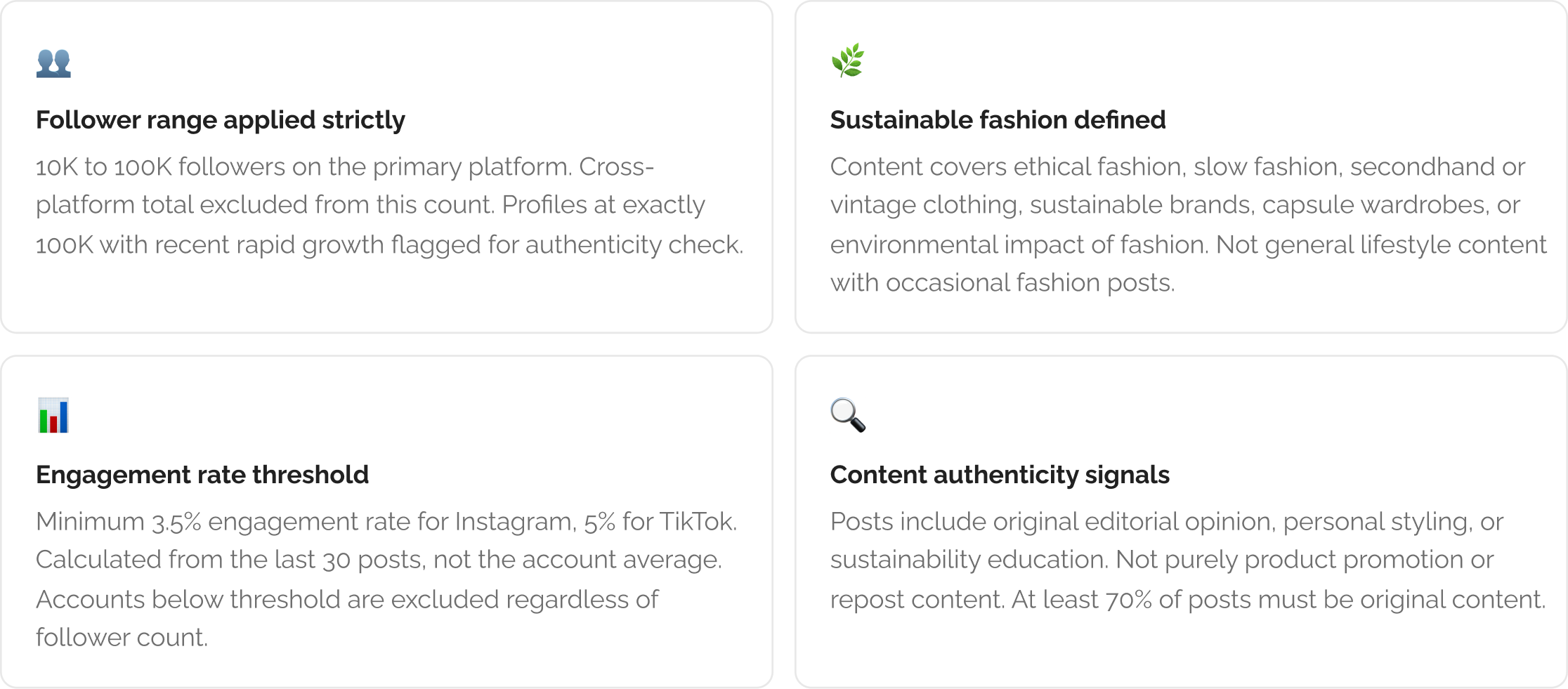
Before Barie searches a single profile, it maps the discovery criteria precisely. “Micro-influencer in sustainable fashion with 10K to 100K followers” has multiple dimensions that need to be operationalised before retrieval begins, otherwise the results are too broad to be useful.
2: Parallel Discovery
Step 2: Parallel discovery across social platforms, databases, and brand mention tracking
Barie fires discovery threads across four source types simultaneously. Each source type surfaces different candidates and different data. Combining them produces a wider and more verified candidate pool than any single source can provide. LunarCrush provides real-time social engagement analytics. Firecrawl retrieves live profile and content data directly from social platforms. Brand mention tracking surfaces creators who already talk about your brand or your values without being paid to do so.

Every candidate surfaced across these five sources is then deduplicated and passed through the four-factor scoring framework before being ranked. The 15 profiles in the final output are the highest-scoring candidates across all five sources combined, not the top results from any single platform.
Brand mention tracking finds your warmest prospects first: Media Watcher surfaces creators who have already mentioned your brand, your competitors, or sustainability topics that align with your messaging in the past 90 days. A micro-influencer who is already talking about your values without being paid is a warmer partnership prospect than one who has never encountered your brand. Barie surfaces these candidates and flags them in the output.
3. Verified Influencer Profiles
Step 3: The 15 verified micro-influencer profiles

Each profile in the output includes verified follower count, engagement rate calculated from the last 30 posts, a content quality assessment, brand alignment score, any recent competitor or brand safety flags, and a direct profile link. The five candidates who already mention sustainable fashion values aligned with your brand are marked with a warm prospect indicator.
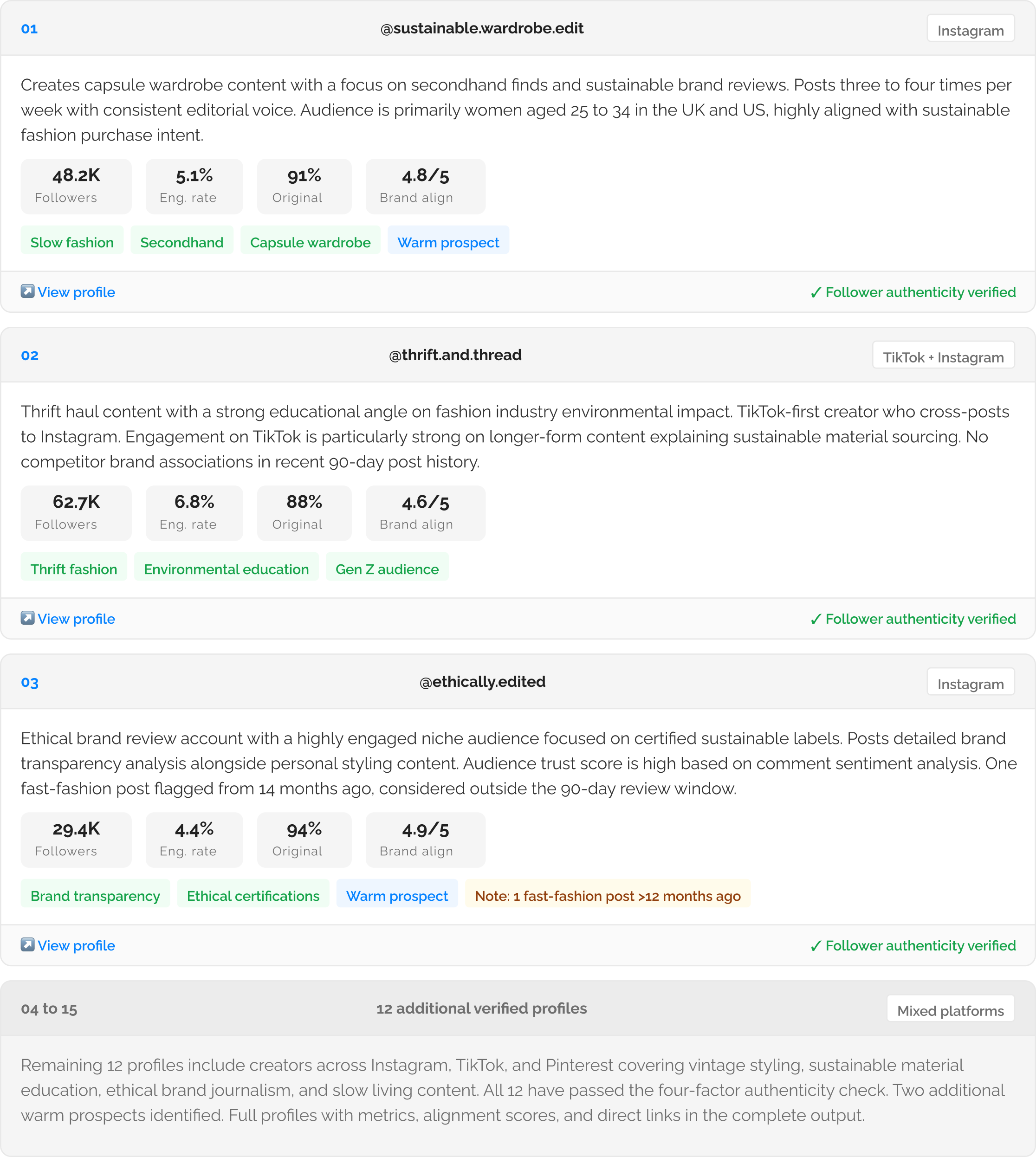
Brand safety flags appear in every profile, not in a separate document: If a candidate promoted a fast-fashion brand in the last 90 days, the flag appears directly in their profile card with the date of the post and the brand name. If a follower count spike suggests purchased followers, that appears in the authenticity section of their card. Nothing material is buried. You see the flag at the same moment you see the profile.
4. Output Across Your Workflow
Step 4: The influencer list delivered to your outreach and partnership tools
Finding the right micro-influencers is only the first step. The output goes directly into the tools your partnerships, marketing, and CRM teams use to act on it. Barie routes each part of the output to where it creates the most value in your workflow.
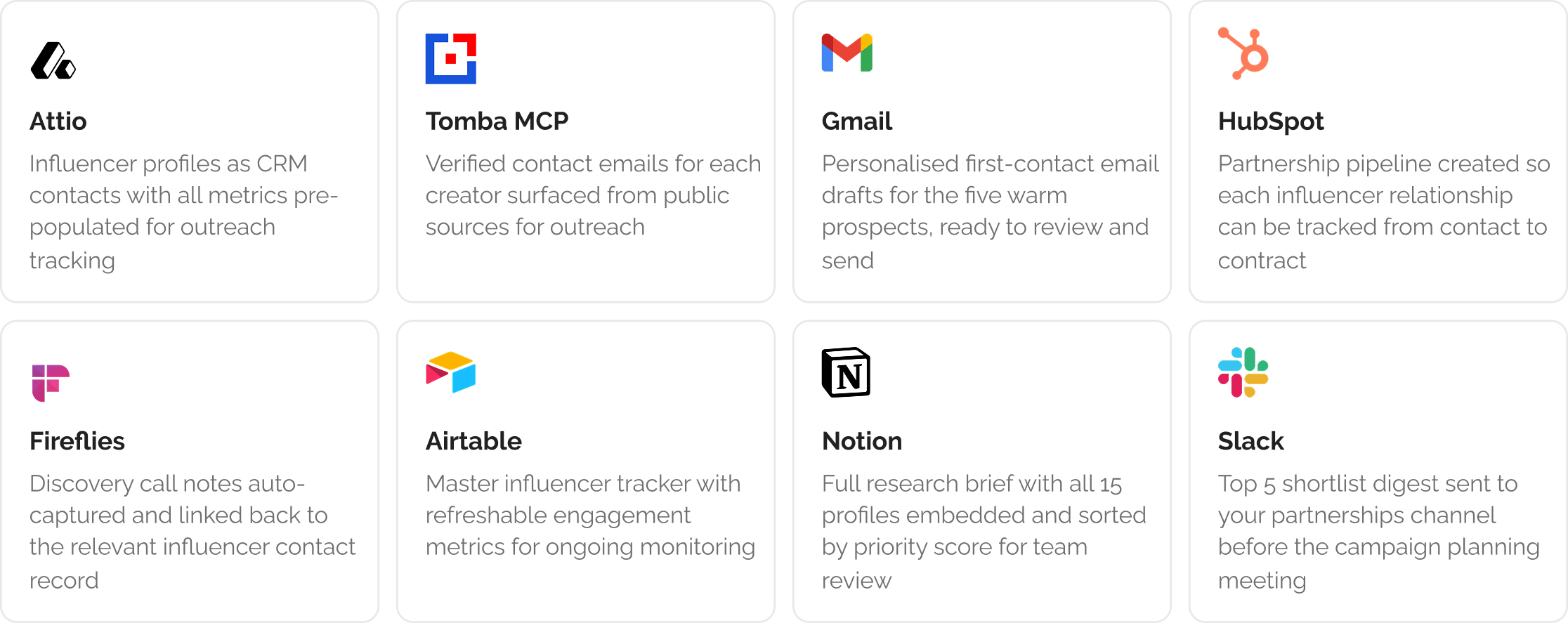
The full verified list lands in Attio as contact records with all metrics pre-populated, so your partnerships team can start outreach tracking immediately without manual data entry. For teams running email outreach, Tomba extracts verified contact emails for each creator where publicly available. Gmail drafts personalised first-contact emails for the top five warm prospects using the profile context Barie has gathered. For campaign management, the shortlist goes into HubSpot as a deal pipeline so your partnerships can be tracked from first contact through to signed agreement.
Fireflies captures notes from influencer discovery calls automatically, linking them back to the relevant Attio contact record. Airtable hosts the master influencer tracker with live engagement metric refresh capability. For teams using Notion as their content planning hub, the full research brief lands there with the 15 profiles embedded and sorted by priority score.
Set it to refresh monthly: Configure Barie to re-run the search monthly using the same parameters and update the Airtable tracker automatically. New creators who enter the 10K to 100K range and meet your criteria are added. Creators whose engagement drops below threshold are flagged for review. Your influencer roster stays current without a new manual research session each campaign cycle.
What you get
Fifteen verified micro-influencer profiles in sustainable fashion, all within the 10K to 100K follower range, all passing a four-factor check for engagement authenticity, content quality, brand alignment, and brand safety. Five warm prospects identified through brand mention tracking. Full metrics for each profile including engagement rate, audience demographics, content quality score, and alignment rating. The list delivered to Attio, HubSpot, Gmail, Airtable, and Notion in one session with personalised outreach drafts ready for the warm prospects.
What it would take a partnerships team two days to compile manually, Barie delivers before the end of the working morning. No fake followers in the final list. No fast-fashion associations hiding in post history. No demographic mismatches discovered after contracts are signed.
The Verdict
Influencer research fails at the verification step. Finding a list of people with the right follower count takes thirty minutes on any platform. Finding fifteen people who have genuinely engaged audiences, authentic content alignment, no brand safety issues, and real purchase-intent audiences in your target demographic takes significantly longer when done manually. Barie applies the four-factor check to every candidate across five source types simultaneously, surfaces the warm prospects your brand mention tracking data already knows about, and delivers the shortlist directly into your partnerships workflow. That is not a faster version of the same process. That is a different standard of result.
Barie features used in this task